Trauma rarely affects only a person’s memories—it often changes the way they experience themselves, their emotions, and the world around them. One of the most misunderstood trauma responses is Dissociation in Trauma Survivors, a protective psychological process that can make individuals feel disconnected from their thoughts, emotions, memories, bodies, or surroundings.
For mental health professionals, recognizing dissociation is essential because clients rarely describe it by saying, “I dissociate.” Instead, they may report feeling numb, emotionally detached, unable to remember important events, disconnected from reality, or as though they’re simply “going through the motions.” These experiences are often misunderstood as lack of motivation, resistance, inattentiveness, or even treatment failure when they may actually reflect adaptive survival responses to overwhelming stress.
As research in trauma psychology continues to evolve, clinicians are increasingly recognizing that Dissociation in Trauma Survivors is not simply a symptom to eliminate. Rather, it represents the nervous system’s attempt to protect an individual from experiences that once felt unbearable.
At Clinical Events, we regularly explore evidence-based approaches for trauma treatment through our Clinical Blog and live continuing education workshops designed specifically for psychologists, counselors, social workers, marriage and family therapists, and behavioral health professionals. As new research emerges, staying informed allows clinicians to provide safer, more effective, and more compassionate care.
What Is Dissociation?
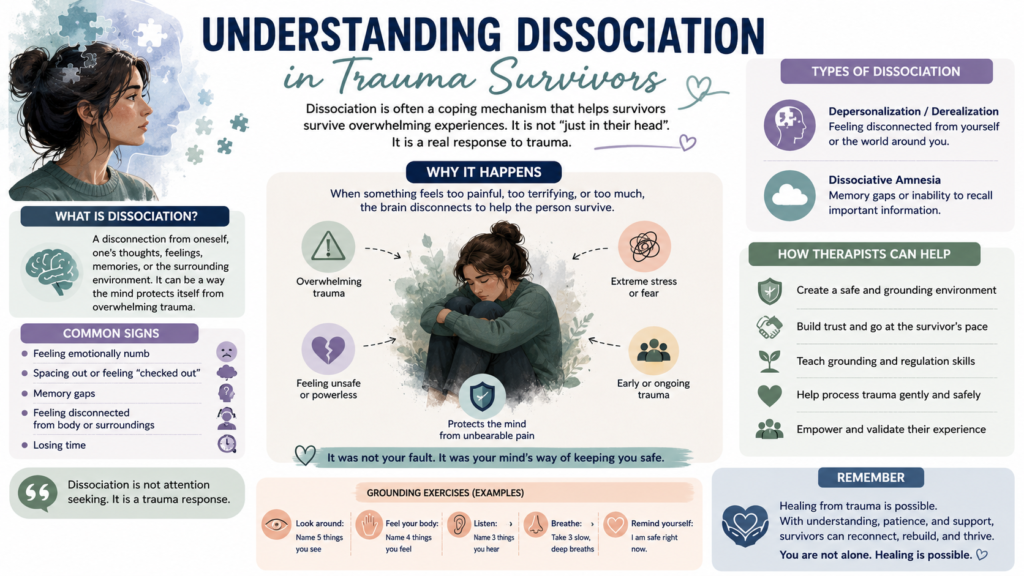
Dissociation is a disruption in the normal integration of consciousness, memory, identity, emotion, perception, body awareness, or behavior. Rather than experiencing thoughts and emotions as connected parts of themselves, individuals experiencing dissociation may feel separated from their internal or external experiences.
This response develops because the human brain is designed to survive overwhelming threats. When escape or protection is impossible, the nervous system may shift into a protective state that reduces emotional and physical awareness.
Instead of remaining fully present during traumatic experiences, the brain may temporarily disconnect awareness from what is happening. While this strategy can help someone survive extreme stress, it often continues long after the traumatic event has ended.
For many trauma survivors, dissociation becomes an automatic coping mechanism rather than a conscious choice.
Why Dissociation Happens After Trauma
The relationship between trauma and dissociation has been extensively studied over the past several decades. Research consistently shows that dissociation occurs more frequently among individuals who have experienced chronic interpersonal trauma, childhood abuse, neglect, domestic violence, combat exposure, or repeated traumatic experiences.
According to the National Institute of Mental Health (NIMH), traumatic experiences can significantly affect how the brain processes fear, memory, emotional regulation, and stress responses. Their educational resources explain that trauma-related conditions often involve changes in brain functioning that influence daily life, emotional health, and relationships.
Clinicians can explore these evidence-based resources through the National Institute of Mental Health.
Similarly, the International Society for Traumatic Stress Studies (ISTSS) provides research-based guidance on trauma assessment, PTSD, and evidence-supported treatment approaches used by clinicians around the world. Their clinical practice resources are particularly valuable for therapists seeking current recommendations on trauma-informed care. Understanding these resources helps clinicians appreciate that dissociation in Trauma Survivors is not a sign of weakness or poor motivation—it is often a sophisticated survival adaptation developed in response to overwhelming threat.
Common Signs of Dissociation in Trauma Survivors
Because dissociation presents differently across clients, clinicians should avoid relying on stereotypes. Instead, careful assessment and curiosity are essential.
Some of the most common clinical signs include:
Emotional Numbing
Clients may describe feeling emotionally “flat,” disconnected, or unable to access feelings that they know should be present. They often report:
- “I know something terrible happened, but I don’t feel anything.”
- “It’s like I’m watching my own life.”
- “I can’t cry anymore.”
Rather than emotional avoidance, these experiences may reflect dissociative protection.
Memory Gaps
Trauma survivors frequently experience partial or complete memory gaps surrounding stressful events.
Some clients remember isolated images but not the full sequence of events.
Others describe losing track of conversations, appointments, or periods of time without understanding why.
Depersonalization
Depersonalization occurs when individuals feel detached from themselves.
Clients often report experiences such as:
- Feeling outside their body
- Watching themselves from a distance
- Feeling robotic
- Feeling unreal
- Losing connection with physical sensations
These experiences can be frightening, especially when clients believe they are “going crazy.”
Derealization
Unlike depersonalization, derealization affects how individuals perceive the external world.
Clients may describe:
- surroundings feeling dreamlike
- people appearing distant
- colors seeming faded
- sounds becoming muffled
- feeling separated from reality
Although reality testing usually remains intact, these symptoms can create significant anxiety.
Identity Confusion
Some trauma survivors struggle to understand who they are.
This may appear as:
- changing opinions frequently
- inconsistent goals
- feeling like different versions of themselves
- difficulty describing personal identity
These experiences often reflect fragmented self-development resulting from chronic trauma rather than personality instability.
The Role of the Nervous System
Modern trauma research emphasizes that healing involves more than changing thoughts.
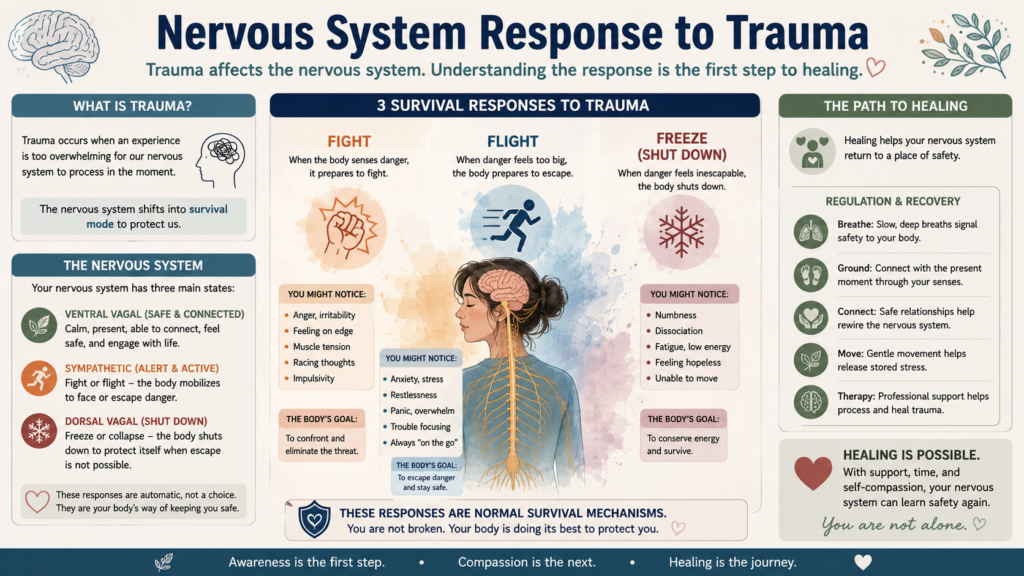
Trauma directly affects the autonomic nervous system, influencing heart rate, breathing, emotional regulation, attention, and perception.
When the nervous system repeatedly experiences danger, survival responses become automatic.
For many clients, dissociation represents activation of the freeze or shutdown response.
Rather than fighting or fleeing, the body conserves energy by reducing awareness and emotional intensity.
This understanding has shifted trauma treatment toward approaches that emphasize nervous system regulation alongside cognitive interventions.
The Substance Abuse and Mental Health Services Administration (SAMHSA) has developed nationally recognized guidance on trauma-informed care, emphasizing safety, trust, collaboration, empowerment, and cultural responsiveness. Therapists seeking practical implementation strategies can explore SAMHSA’s trauma-informed resources. These principles help clinicians avoid unintentionally retraumatizing clients while supporting gradual healing.
Why Misdiagnosis Happens
One of the greatest clinical challenges is that Dissociation in Trauma Survivors often resembles other mental health conditions.
Without careful assessment, dissociation may be mistaken for:
- ADHD
- Depression
- Anxiety disorders
- Personality disorders
- Psychosis
- Treatment resistance
- Lack of motivation
For example, a client who appears distracted during therapy may actually be experiencing dissociation rather than poor attention.
Likewise, emotional numbness may resemble depression while actually representing nervous system shutdown.
Accurate assessment requires clinicians to consider trauma history, symptom patterns, nervous system responses, and environmental triggers instead of relying solely on observable behaviors.
This growing understanding is why many clinicians continue expanding their expertise through specialized trauma education. At Clinical Events, our Upcoming Events regularly feature workshops on trauma-informed care, neuroscience, PTSD treatment, Internal Family Systems (IFS), anxiety, and evidence-based interventions that help clinicians better understand complex trauma presentations and improve client outcomes.
Evidence-Based Assessment of Dissociation
Accurate assessment is the foundation of effective trauma treatment. Because Dissociation in Trauma Survivors often overlaps with anxiety, depression, PTSD, ADHD, and personality disorders, clinicians should take time to explore trauma history, symptom patterns, and nervous system responses before making diagnostic conclusions.
A thorough assessment should examine when dissociative symptoms occur, what triggers them, how long they last, and how they affect daily functioning. Clients may describe “spacing out,” losing track of time, emotional numbness, or feeling detached from themselves without recognizing these experiences as dissociation.
Standardized assessment tools can further support clinical decision-making. The International Society for Traumatic Stress Studies (ISTSS) offers evidence-informed guidance for trauma assessment and treatment planning through its clinical resources. Clinicians can also explore educational materials from the National Center for PTSD, a program of the U.S. Department of Veterans Affairs, which provides practical guidance on PTSD, complex trauma, and trauma-related dissociation. These resources help therapists integrate current research into everyday clinical practice while improving assessment accuracy.
As you continue building your trauma assessment skills, explore additional educational articles in the Clinical Events Blog and our Trauma-Focused Continuing Education Workshops, where expert presenters discuss evidence-based assessment strategies for complex trauma presentations.
Evidence-Based Treatment Approaches
Successful treatment focuses on helping clients feel safe, regulated, and connected before processing traumatic memories. Modern trauma therapy emphasizes stabilization as the first phase of recovery.
Trauma-Informed Care
Trauma-informed care begins with understanding that behaviors often represent survival adaptations rather than pathology. Instead of asking, “What’s wrong with this client?” clinicians learn to ask, “What happened to this client?”
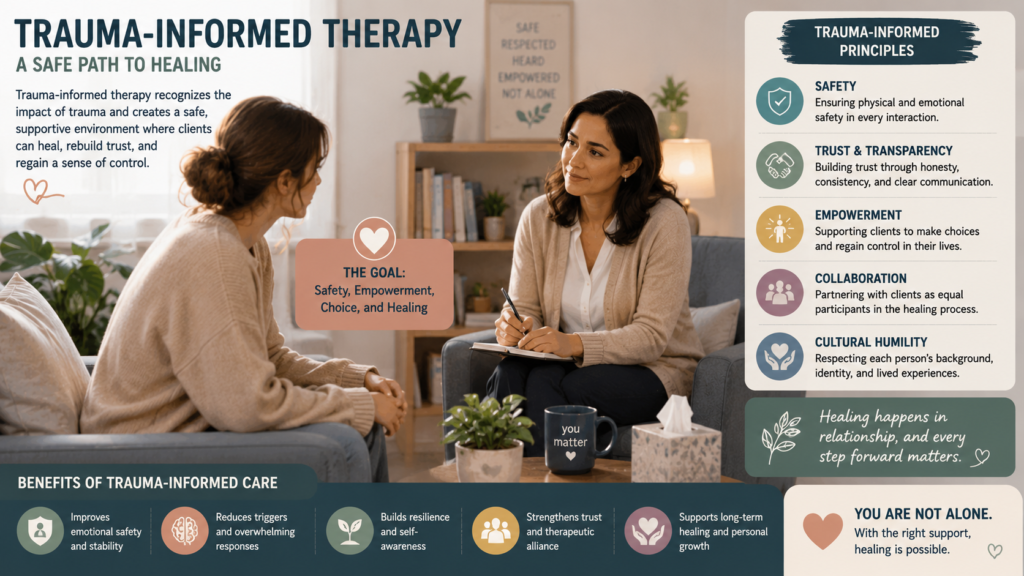
The Substance Abuse and Mental Health Services Administration (SAMHSA) provides one of the most widely accepted trauma-informed care frameworks in the United States. Their guidance emphasizes safety, trustworthiness, collaboration, peer support, empowerment, and cultural humility. These principles can be explored through SAMHSA’s Trauma and Violence resources.
Applying these principles helps create therapeutic environments where clients feel emotionally and physically safe enough to begin healing.
Cognitive Behavioral Therapy (CBT)
Cognitive Behavioral Therapy remains one of the most researched approaches for trauma-related conditions. Once clients develop sufficient emotional regulation, CBT interventions can help identify distorted beliefs, challenge trauma-related thinking patterns, and develop healthier coping strategies.
However, clinicians should recognize that severe dissociation may interfere with traditional cognitive interventions if stabilization has not yet occurred.
EMDR
Eye Movement Desensitization and Reprocessing (EMDR) has become an important evidence-based treatment for trauma. EMDR helps clients process traumatic memories while reducing emotional distress and negative beliefs associated with those experiences.
The EMDR International Association (EMDRIA) provides extensive educational information regarding research-supported EMDR practice, clinician training standards, and treatment guidelines.
When working with clients experiencing significant dissociation, clinicians often modify pacing and prioritize stabilization before intensive trauma processing.
Internal Family Systems (IFS)
Many trauma clinicians have incorporated Internal Family Systems (IFS) into their work because it offers a compassionate framework for understanding internal conflict.
Rather than viewing dissociative experiences as pathology, IFS conceptualizes different emotional “parts” as protective responses developed during overwhelming life experiences.
Clinicians interested in learning more about this model may benefit from our Internal Family Systems (IFS) Continuing Education Workshops, where practical applications of parts work are discussed through trauma-informed clinical case examples.
Somatic Approaches
Trauma affects both the mind and body. Somatic interventions help clients reconnect with bodily awareness while increasing tolerance for emotional experiences.
Rather than focusing exclusively on thoughts, therapists may incorporate:
- breathing exercises
- body awareness
- grounding techniques
- movement-based regulation
- sensory awareness
- nervous system regulation
These interventions support clients who struggle to remain emotionally present during therapy sessions.
Practical Grounding Techniques
Grounding techniques are among the most effective interventions for reducing dissociation during therapy.
Helpful strategies include:
5-4-3-2-1 Sensory Awareness
Encourage clients to identify:
- 5 things they see
- 4 things they feel
- 3 things they hear
- 2 things they smell
- 1 thing they taste
This exercise gently reconnects attention to the present moment.
Controlled Breathing
Slow diaphragmatic breathing helps regulate physiological arousal and activate the parasympathetic nervous system.
Object Orientation
Holding a textured object, describing colors within the room, or noticing environmental details can interrupt dissociative states.
Safe Place Visualization
Guided imagery allows clients to mentally access environments associated with safety before processing difficult experiences.
Common Clinical Mistakes
Even experienced therapists may unintentionally reinforce dissociation if they move too quickly.
Common mistakes include:
Processing Trauma Too Early
Clients first need emotional stabilization before revisiting traumatic memories.
Misinterpreting Dissociation
Withdrawal, emotional numbness, or poor eye contact should not automatically be viewed as resistance.
Overlooking Nervous System Regulation
Healing requires attention to both psychological and physiological processes.
Ignoring Protective Functions
Dissociation developed for survival. Respecting its protective purpose helps strengthen the therapeutic alliance.
Clinical Case Example
Sarah, a 34-year-old survivor of childhood emotional abuse, frequently described feeling disconnected during stressful conversations. She struggled to remember therapy sessions and often apologized for “not paying attention.”
Initially, these symptoms resembled attention difficulties. After a comprehensive trauma assessment, her therapist recognized that Sarah’s experiences reflected dissociation triggered by interpersonal conflict.
Treatment focused first on grounding exercises, emotional regulation, psychoeducation, and nervous system stabilization before processing traumatic memories. Over time, Sarah reported improved emotional awareness, stronger relationships, fewer dissociative episodes, and greater confidence in managing difficult situations.
This example illustrates why understanding Dissociation in Trauma Survivors can significantly improve treatment planning and therapeutic outcomes.
The Future of Trauma Therapy
Trauma research continues to evolve rapidly.
Emerging areas include:
- neuroscience-informed psychotherapy
- polyvagal-informed interventions
- attachment-focused treatment
- virtual reality exposure therapy
- digital mental health tools
- AI-assisted clinical education
- personalized trauma treatment planning
As evidence grows, clinicians increasingly integrate biological, psychological, relational, and social perspectives into comprehensive trauma care.
At Clinical Events, we remain committed to helping mental health professionals stay current through our Clinical Blog, live Continuing Education Workshops, and specialized training covering PTSD, anxiety, neuroscience, ethics, trauma-informed care, Internal Family Systems (IFS), and evidence-based psychotherapy.
Continuing education not only strengthens clinical competence but also improves the quality of care delivered to trauma survivors.
Upcoming Clinical Events:
- Working with Developmental Trauma and Attachment from a Somatic Lens
- Trauma and Dissociation: Navigating the Complexities in Clinical Practice
- Trauma-Informed Care & Complex Trauma
- Evidence-Based Treatment for PTSD & Complex Trauma
Conclusion
Understanding Dissociation in Trauma Survivors is essential for every mental health professional working with trauma. Dissociation is not a sign of weakness or treatment resistance—it is often a highly adaptive survival response developed under overwhelming circumstances.
By combining accurate assessment, trauma-informed care, nervous system regulation, evidence-based interventions, and compassionate therapeutic relationships, clinicians can help clients reconnect with themselves and move toward lasting recovery.
As research continues to advance, ongoing education remains one of the most valuable investments clinicians can make. Whether through reading current research, consulting authoritative organizations, or participating in specialized continuing education, staying informed ensures that clients receive the highest quality trauma-informed care available.
FAQS
What is dissociation in trauma survivors?
Dissociation is a protective psychological response that creates a temporary disconnection from thoughts, emotions, memories, body sensations, or surroundings during or after overwhelming traumatic experiences. While it may reduce distress in the short term, persistent dissociation can interfere with relationships, emotional regulation, and daily functioning if left unaddressed.
How can therapists recognize dissociation in clients?
Therapists should look for signs such as emotional numbness, memory gaps, feeling detached from one’s body, losing track of time, appearing mentally absent during sessions, or describing the world as unreal or dreamlike. A comprehensive trauma assessment, combined with an understanding of nervous system responses, helps distinguish dissociation from conditions such as ADHD, depression, or anxiety disorders.