The client is showing up every week.
They are engaged.
They trust you.
You have a treatment plan.
And yet something is changing.
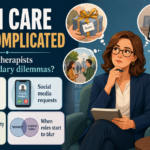
Symptoms are getting harder to contain between appointments. The client is using more crisis contact. Basic functioning is deteriorating. The same safety concerns keep returning. You are spending sessions trying to stabilize what happened since last week rather than moving treatment forward.
Then a difficult thought appears:
Is outpatient therapy still enough?
For many clinicians, this is one of the most emotionally loaded questions in practice.
It can feel very different from selecting an intervention.
Changing a CBT technique does not usually threaten the therapeutic relationship.
Recommending a Higher Level of Care can.
A client may hear:
“You’re too much for me.”
“You’re failing therapy.”
“I’m sending you away.”
“You don’t want to work with me anymore.”
Meanwhile, the therapist may be thinking:
“What if I’m overreacting?”
“What if hospitalization makes things worse?”
“What if the client refuses?”
“What if I destroy the alliance?”
“What if their insurance won’t cover it?”
“What if I wait—and something terrible happens?”
This is why level-of-care decisions are not merely administrative referrals.
They sit at the intersection of clinical judgment, ethics, safety, client autonomy, professional competence, access barriers, documentation, countertransference, and relationship repair.
The Clinical Events training When Outpatient Care Isn’t Enough: Ethical Decision-Making Across the Continuum of Care is built around exactly this threshold. Its stated goals include recognizing acuity, differentiating IOP, PHP, residential and inpatient care, identifying the limits of outpatient treatment, weighing delayed versus premature referrals, using consultation and documentation, and preserving the therapeutic alliance during step-up conversations.
The goal is not to teach therapists to refer frightened clients automatically.
Nor is it to imply that every increase in symptoms requires hospitalization.
The harder skill is knowing when more weekly therapy is no longer the same thing as enough therapy.
Why Therapists Often Wait Longer Than They Realize
A clinician rarely wakes up one morning and deliberately decides:
“I’m going to keep this client in an insufficient level of care.”
Delay usually happens gradually.
The therapist adds an extra session.
Then another.
They create a stronger safety plan.
They increase between-session communication.
They consult informally.
The client promises to try harder.
The clinician tells themselves:
“Let’s see how this week goes.”
Then another week passes.
Sometimes this flexibility works.
Clients can experience temporary symptom spikes without requiring a major change in treatment setting.
But sometimes “one more week” quietly becomes the treatment strategy.
The event page names several barriers that can interfere with step-up decisions, including fear of rupture, countertransference, rescue dynamics, financial pressures, systemic barriers, and prolonged indecision.
That is important because delayed referral is not always caused by poor assessment.
Sometimes the therapist sees the problem clearly.
What they struggle with is acting on what they see.
What Higher Level of Care Actually Means
Mental-health care exists across a continuum rather than as a binary choice between “weekly therapy” and “hospitalization.”
Exact program structures, admission criteria, payer definitions, staffing, and availability vary by facility and jurisdiction, but clinicians commonly encounter several broad levels.
| Level | General Structure | Typical Clinical Function | Important Limitation |
| Routine Outpatient | Individual/group care while client lives independently | Ongoing psychotherapy, medication management, skill building | Limited monitoring and structure between sessions |
| Intensive Outpatient Program (IOP) | Multiple treatment hours each week while client remains in community | More frequent therapy, group work, psychiatric support, stabilization | Does not provide 24-hour supervision |
| Partial Hospitalization Program (PHP) | Highly structured treatment during substantial portions of the day without overnight hospitalization | Intensive multidisciplinary care when ordinary outpatient treatment is insufficient | Client still spends nights outside program |
| Residential Treatment | Client lives within a treatment setting | Continuous structure, milieu support, multidisciplinary treatment | Program intensity and medical capability vary widely |
| Inpatient Psychiatric Care | Hospital-based 24-hour care | Acute stabilization, intensive psychiatric and medical monitoring | Intended for situations requiring hospital-level containment or supervision |
CMS describes an IOP as a distinct organized outpatient psychiatric program for acute mental illness or substance-use conditions and currently defines Medicare IOP intensity around a minimum of nine hours of services per week in applicable settings. CMS describes PHP as a more intensive structured outpatient alternative to psychiatric hospitalization, with Medicare PHP generally involving at least twenty hours of treatment per week.
CMS coverage guidance also distinguishes PHP from inpatient care by the absence of 24-hour supervision. Its psychiatric PHP guidance notes that inpatient treatment is appropriate when the person requires 24-hour supervision because of factors such as probability of self-harm, harm to others, or inability to care safely for themselves outside the hospital.
These are useful orientation points—not universal admission rules for every client, insurer, program, or jurisdiction.
A therapist still needs to assess the actual person in front of them.
Sign 1: The Client Is Surviving From Session to Session Rather Than Benefiting Between Sessions
Consider this pattern:
Monday’s session is spent stabilizing the weekend.
Wednesday brings another crisis message.
Friday requires an unscheduled check-in.
The following Monday, therapy begins by repairing what happened again.
Nothing is necessarily wrong with short-term crisis support.
But when the entire outpatient treatment becomes a repeating cycle of destabilization → emergency support → temporary stabilization → destabilization, the clinician should ask whether the treatment structure matches the client’s current needs.
The question is not:
“Can I technically keep seeing this person?”
The question is:
“Is the amount and type of support I can provide in this setting sufficient for the pattern I’m observing?”
Sometimes clinicians respond to increasing acuity by slowly turning ordinary outpatient therapy into an improvised intensive program.
They add:
- extra sessions;
- frequent texting;
- repeated crisis calls;
- coordination with several outside providers;
- extensive between-session monitoring.
That can feel compassionate.
But there is a point where the therapist should ask whether the client would benefit from a treatment setting designed to provide that intensity.
Sign 2: Safety Concerns Keep Returning Without Meaningful Stabilization
Risk is not a single yes/no variable.
Clients can experience suicidal thoughts without automatically requiring hospitalization, and clinicians should avoid using hospitalization as a reflexive response to every disclosure.
The problem is different when risk repeatedly escalates despite the current treatment plan.
Patterns that deserve careful reassessment may include:
- increasingly frequent suicidal thinking;
- escalating intent or planning;
- repeated self-harm;
- serious deterioration in impulse control;
- inability to use previously workable safety strategies;
- recurrent emergency presentations;
- rapidly changing clinical status;
- severe substance-related disinhibition;
- diminishing ability to maintain safety outside sessions.
The therapist’s job is not to predict the future perfectly.
It is to recognize when the structure of treatment no longer matches the level of monitoring, containment, or intervention the client may require.
This is one reason Higher Level of Care decisions should be based on patterns, not simply whether the therapist feels frightened during one appointment.
The Clinical Events course specifically emphasizes recognizing behavioral and clinical indicators of increasing acuity over time rather than relying only on isolated crisis events.
Sign 3: Basic Functioning Is Collapsing Across Multiple Areas
A client’s symptom score may not tell the whole story.
Look at functioning.
Are they still:
- eating adequately?
- sleeping enough to function?
- attending work or school?
- managing medications?
- maintaining basic hygiene?
- caring for dependents?
- staying oriented?
- attending medical appointments?
- able to leave home when necessary?
- able to avoid dangerous substance use?
- capable of carrying out agreed treatment tasks?
A client might deny feeling “worse” while their life is becoming significantly less sustainable.
For example:
“My anxiety is about the same.”
But they have stopped going to work.
They have not eaten a full meal in three days.
They are sleeping two hours a night.
They are increasingly unable to leave the house.
These changes deserve more weight than the client’s global statement that symptoms are “fine.”
A Higher Level of Care may become worth discussing when ordinary outpatient treatment cannot provide enough structure to address severe functional deterioration safely and effectively.
That still does not determine which setting is appropriate.
It tells the clinician the current setting needs to be reconsidered.
Sign 4: The Therapist Is Providing More Containment Than the Outpatient Role Can Sustain
There is a subtle question clinicians should ask:
“What would happen if I stopped making exceptions?”
Suppose treatment now requires:
- repeated after-hours calls;
- frequent emergency scheduling;
- substantial coordination beyond the usual scope;
- constant availability;
- session extensions several times a week;
- daily reassurance;
- therapist monitoring that the practice is not structured to provide.
It is possible that the client genuinely needs that degree of support.
The mistake is assuming the solution must therefore be:
The outpatient therapist personally provides all of it.
Clinical dedication can slowly become role expansion.
The therapist begins functioning as:
- primary crisis service;
- case manager;
- emergency contact;
- care coordinator;
- daily regulator;
- informal intensive program.
The problem is not simply burnout.
It is whether the client is receiving care inside a structure capable of holding the level of need.
This is also a professional competence issue.
The NASW Code emphasizes practicing within areas of competence and increasing professional knowledge and skill. It also describes ethical decision-making as contextual, encourages consultation for complex dilemmas, and recognizes that ethics cannot be reduced to a simple rulebook.
Sign 5: Treatment Is Becoming More Reactive and Less Therapeutic
Ask yourself:
What percentage of treatment is now crisis cleanup?
A client may originally have entered treatment for trauma, anxiety, depression, relationships, or substance use.
But over time, every appointment becomes:
- repairing last night’s crisis;
- recreating a safety plan;
- responding to another emergency;
- addressing another abrupt deterioration.
The original treatment goals disappear.
This does not mean the client is “not doing therapy properly.”
It may mean the treatment needs have changed.
A useful distinction is:
Outpatient therapy can contain distress.
It does not necessarily need to eliminate crisis.
But if repeated crisis prevents the actual treatment from functioning at all, the clinician should reconsider whether additional structure, monitoring, psychiatric services, group support, medical involvement, or multidisciplinary treatment is indicated.
Sign 6: The Client Needs Multiple Services That One Therapist Cannot Provide
Some clinical presentations become too complex for one-provider care.
The client may need combinations of:
- psychotherapy;
- psychiatric evaluation;
- medication management;
- nursing support;
- nutritional services;
- substance-use treatment;
- medical monitoring;
- group therapy;
- family work;
- skills training;
- case management;
- structured daily support.
This is where a Higher Level of Care can offer something additional sessions with one therapist cannot:
a coordinated treatment system.
CMS describes PHP as a multidisciplinary and multimodal program that can include psychotherapy, psychiatric evaluation, medication management, occupational or activity-based treatment, psychoeducation, and other structured services.
The therapist should not interpret referral as:
“I couldn’t help.”
A better formulation may be:
“Your needs now require more people and more structure than one outpatient provider can responsibly offer.”
Sign 7: The Client Is Deteriorating Despite a Reasonable Outpatient Treatment Plan
Therapists sometimes confuse treatment persistence with ethical perseverance.
Those are not always the same thing.
Imagine a client who has:
- attended consistently;
- received an appropriate assessment;
- participated in an evidence-informed treatment;
- collaborated with the clinician;
- received reasonable treatment modifications;
yet continues to deteriorate significantly.
At some point, “keep doing the same thing longer” needs justification.
That does not mean therapy should be abandoned whenever progress is slow.
Many conditions require lengthy treatment.
The ethical question is more specific:
Does the current deterioration indicate that the client needs a different intensity or structure of treatment—not merely a different technique?
The Clinical Events event explicitly addresses the ethical risks of both premature referral and delayed action.
That balance matters.
Referring too early can disrupt care.
Waiting too long can leave clients in a setting that no longer provides what they need.
Sign 8: You Keep Thinking About Referral—but Keep Talking Yourself Out of It
This is an underrated clinical signal.
You have thought:
“Maybe they need IOP.”
Then:
“No, let me give this another week.”
Two weeks later:
“Maybe PHP.”
Then:
“They’ll feel rejected.”
You bring the case to supervision.
A colleague also raises level of care.
You document worsening acuity.
But you still do not discuss it with the client.
The hesitation itself deserves examination.
What exactly are you afraid of?
- Client anger?
- Client abandonment fears?
- Losing the client financially?
- Appearing incompetent?
- Being accused of overreacting?
- Not finding an available program?
- The client refusing?
- Feeling responsible for their reaction?
These are not signs that referral is automatically correct.
They are signs that the therapist’s emotional response needs to be separated from the clinical assessment.
The event’s curriculum explicitly includes countertransference, rescue fantasies, fear of rupture, financial/systemic pressures, and prolonged indecision as barriers to ethical step-up decisions.
Sign 9: Your Documentation No Longer Matches What You Privately Believe
This is one of the strongest self-audit questions in clinical practice.
Suppose the therapist privately thinks:
“I am extremely concerned about this client’s stability.”
But the progress note reads:
“Continue weekly therapy.”
No rationale.
No consultation.
No explanation of why outpatient treatment remains appropriate.
No discussion of alternatives.
That mismatch deserves attention.
Documentation should not become defensive paperwork designed primarily for liability protection.
It should reflect clinical thinking.
When considering a Higher Level of Care, useful documentation may include:
- relevant changes in symptoms and functioning;
- current risk assessment;
- patterns over time;
- interventions already attempted;
- client response;
- consultation obtained;
- treatment options considered;
- barriers to access;
- client preferences;
- rationale for continuing or changing care;
- follow-up plan.
The NASW Code explicitly describes ethical decision-making as a process requiring informed professional judgment and encourages consultation when dilemmas have no simple answer.
Clinical Events’ broader resource on ethical practice in therapy also emphasizes consultation, documentation, competence, boundaries, and transparency as safeguards when clinicians encounter gray areas.
IOP vs. PHP vs. Residential vs. Inpatient: What Therapists Need to Understand
The therapist does not need to run every type of program.
But they should understand enough to explain why one level may offer something outpatient care does not.
Intensive Outpatient Program
An IOP generally provides significantly more treatment contact than routine weekly therapy while allowing clients to remain in the community.
CMS currently describes Medicare-covered IOP as an organized outpatient psychiatric program that can address acute mental illness or substance-use disorders and involves a structured group of behavioral-health services.
An IOP may be considered when a client needs:
- more frequent therapeutic contact;
- group support;
- structured skills work;
- psychiatric coordination;
- greater accountability;
without requiring hospital-level 24-hour supervision.
Partial Hospitalization Program
PHP is more intensive.
CMS describes PHP as a structured outpatient psychiatric treatment program serving clients who require more intensive multidisciplinary treatment than ordinary outpatient care but do not require 24-hour inpatient supervision. Medicare PHP is designed as an alternative to or step-down from psychiatric hospitalization in appropriate cases.
PHP may provide:
- multiple hours of treatment per day;
- psychiatric oversight;
- groups;
- individual treatment;
- medication management;
- psychoeducation;
- multidisciplinary coordination.
Residential Treatment
Residential programs generally provide treatment while the client lives in a therapeutic setting.
But “residential” is not one standardized level nationally.
Programs may differ substantially in:
- staffing;
- psychiatric availability;
- medical capability;
- specialty population;
- treatment model;
- crisis capacity;
- length of stay.
The therapist should verify what an actual program offers rather than treating “residential” as a universal clinical package.
Inpatient Psychiatric Treatment
Inpatient treatment offers hospital-level 24-hour care.
CMS psychiatric PHP guidance distinguishes inpatient need in part by situations where 24-hour supervision is required because of severity or safety concerns.
The decision must still be individualized and made according to applicable clinical, legal, organizational, and payer requirements.
Why the Least Restrictive Setting Still Matters
More treatment is not always better treatment.
A client does not automatically benefit from the most restrictive environment available.
The ethical objective is to match intensity to need.
Too little structure can leave a client unsupported.
Too much restriction can interrupt:
- employment;
- school;
- parenting;
- relationships;
- autonomy;
- community functioning.
CMS coverage guidance for psychiatric PHP reflects the general idea that patients should receive treatment in the least intensive setting capable of meeting their clinical needs.
That principle prevents Higher Level of Care decisions from becoming fear-driven.
The question is not:
“What is the safest imaginable setting?”
It is:
“What is the least restrictive setting that can reasonably meet this client’s current clinical needs?”
The Referral Conversation Can Feel Like Rejection
Imagine telling a client:
“I think you need more care than I can provide.”
Even if clinically accurate, the sentence can land painfully.
A trauma survivor may hear abandonment.
A client with chronic shame may hear failure.
A client with attachment insecurity may think:
“I finally trusted someone, and now they’re getting rid of me.”
A client who has had negative hospital experiences may become terrified.
So the ethical task includes how the recommendation is communicated.
Instead of:
“You’re too high risk for outpatient.”
consider:
“I want to talk about something because I’m concerned that one hour a week isn’t giving you enough support right now. You’ve been working hard, but I’m seeing that the time between sessions is becoming increasingly difficult. I’d like us to look together at options that provide more structure without treating this as a failure.”
That language does several things.
It describes the observation.
It separates need from blame.
It keeps the client involved.
It frames the referral as treatment planning rather than expulsion.
Use the CARE Framework for Step-Up Conversations
This is a practical clinical thinking aid, not a validated assessment instrument.
C — Clarify What You Are Seeing
Use observable patterns.
“You’ve needed emergency support three times this month, and you’re telling me you’re no longer able to manage meals or work consistently.”
Avoid vague statements like:
“You’re getting too severe.”
A — Ask for the Client’s Perspective
“How are you experiencing the amount of support you’re getting right now?”
Clients may already know the current structure is insufficient.
R — Recommend and Explain
Do not simply name a program.
Explain what additional treatment could provide.
“An IOP could give you more contact during the week, group support, and more structured skills practice while you continue living at home.”
E — Explore Barriers and Next Steps
Ask about:
- cost;
- insurance;
- transportation;
- childcare;
- work;
- previous treatment experiences;
- fear;
- culture;
- disability access;
- language;
- location.
A theoretically ideal referral that a client cannot access is not a complete treatment plan.
Client Scenario 1: “Please Don’t Send Me Away”
Composite example
Jasmine has been in outpatient trauma therapy for nine months.
Over six weeks:
- sleep deteriorates;
- she misses work repeatedly;
- self-harm returns;
- crisis contacts increase;
- therapy is increasingly devoted to immediate stabilization.
Her therapist begins considering a Higher Level of Care.
When PHP is mentioned, Jasmine says:
“I knew this would happen. As soon as I got worse, you’d get rid of me.”
The therapist’s first impulse may be reassurance:
“No, no, forget I said it.”
That may preserve the moment.
It may also avoid the clinical issue.
A stronger response:
“It makes sense that this feels like I’m sending you away. I don’t want to rush past that. I’m bringing this up because I want you to have more support, not less. We can talk through what PHP actually means, what alternatives exist, and what worries you most before we make decisions.”
Now the alliance becomes part of the referral process.
Client Scenario 2: “But I’m Not Suicidal”
Composite example
Marcus believes hospitalization is the only alternative to weekly therapy.
His functioning is deteriorating severely, but he denies active suicidal intent.
When his therapist suggests discussing an IOP, Marcus responds:
“I’m not suicidal. Why would I need that?”
The therapist can clarify:
“More intensive care isn’t only for people who are immediately suicidal. We’re looking at how much support you need to function and whether weekly sessions are enough right now.”
This matters because clients may equate all treatment escalation with involuntary hospitalization.
Understanding the continuum can reduce unnecessary fear.
Client Scenario 3: Access Makes the “Best” Plan Impossible
Composite example
A therapist recommends PHP.
The client says:
“The nearest program is ninety minutes away. I don’t have a car. I’ll lose my job if I attend every weekday.”
Now the ethical dilemma changes.
The clinician cannot treat access barriers as evidence that outpatient care is adequate.
But they also cannot pretend the recommended program is realistically available.
Potential next steps may involve:
- care coordination;
- telehealth options where appropriate;
- insurance case management;
- consultation;
- alternative programs;
- family/support involvement with consent;
- psychiatric coordination;
- interim risk-management planning.
NASW’s ethical framework specifically emphasizes social justice, attention to environmental barriers, access to services and resources, and meaningful participation in decision-making.
Clinical ethics is not simply identifying the theoretically correct program.
It also means confronting the system the client actually has to navigate.
Client Scenario 4: The Therapist Is Rescuing
Composite example
Lena has become increasingly unstable.
Her therapist knows an IOP consultation is appropriate but worries:
“She has abandonment trauma. A referral will destroy her.”
Instead, the therapist adds:
- two extra sessions;
- extensive texting;
- weekend check-ins;
- prolonged appointments.
The therapist becomes exhausted.
Lena becomes increasingly dependent on one relationship.
The clinician’s compassion is real.
But the structure may now be reinforcing the belief that safety depends on one therapist remaining constantly available.
A useful supervision question is:
“Am I protecting the therapeutic alliance—or avoiding a difficult clinical decision because I cannot tolerate the possibility that my client will feel hurt?”
That question is uncomfortable.
It is also ethically important.
Autonomy Does Not Mean Clinicians Stop Making Recommendations
Therapists sometimes become so focused on client choice that they become vague about professional judgment.
“Whatever you want is fine.”
That is not always collaborative care.
Clients come to clinicians partly because clinicians possess specialized knowledge.
Respecting autonomy means involving clients meaningfully, communicating honestly, avoiding unnecessary coercion, explaining options, and respecting applicable rights.
It does not mean pretending every treatment option is equally appropriate.
NASW’s ethical principles emphasize both the dignity and self-determination of clients and the professional’s responsibility to exercise informed ethical judgment.
Good collaboration sounds like:
“The decision matters to you, and I want you involved. I also need to be transparent that based on what I’m seeing, I believe more intensive treatment should be seriously considered.”
That respects both autonomy and professional responsibility.
Consultation Is Not an Admission That You Don’t Know What You’re Doing
High-acuity cases can create tunnel vision.
A therapist has spent months with the client.
They know the history.
They know every setback.
That familiarity is valuable.
It can also make it harder to see gradual deterioration.
Consultation can help answer:
- Is acuity increasing?
- Are we overreacting to one event?
- Has the current setting become insufficient?
- Is countertransference influencing the recommendation?
- Are we avoiding referral?
- Are we referring prematurely?
- What alternatives have we missed?
- What should be documented?
The NASW Code explicitly recommends appropriate consultation when clinicians encounter ethical dilemmas and notes that ethical decisions require contextual professional judgment rather than mechanical rule application.
The American Counseling Association also provides ethics-consultation resources for members and continues to identify ethics, diagnosis, intervention selection, confidentiality, boundaries, and professional standards as core ethical practice areas.
Important 2026 update: ACA states that the 2014 ACA Code of Ethics remains the current code as of August 2026, while a revised code is expected to be adopted in September 2026. Because this event is scheduled for September 19, clinicians should confirm the current ACA code at the time of training or publication rather than assuming the transition has already occurred.
The Ethical Risk of Referring Too Soon
This article has focused heavily on delayed escalation.
But unnecessary escalation has risks too.
Premature referral may:
- interrupt a functioning therapeutic relationship;
- reinforce a client’s belief that strong emotions are dangerous;
- increase financial burden;
- remove a client from work or family unnecessarily;
- expose the client to more restrictive treatment than needed;
- communicate clinician fear rather than clinical necessity.
That is why the event’s emphasis on both delayed and premature referral is so important.
Ethical decision-making requires tolerating uncertainty long enough to assess carefully.
The Ethical Risk of Waiting Too Long
Waiting also has consequences.
Delayed action may leave:
- escalating risk inadequately contained;
- a severely impaired client without enough treatment intensity;
- an outpatient therapist operating beyond sustainable scope;
- families or support systems without adequate coordination;
- a treatment plan disconnected from actual acuity.
The best question is not:
“Can I defend keeping this client?”
or:
“Can I defend referring?”
It is:
“Which treatment setting can currently provide the care this individual needs, and what evidence supports that conclusion?”
Documentation Should Show a Decision Process
A strong note might capture:
Assessment:
Client reports increasing functional impairment and recurrent safety concerns over the past four weeks.
Pattern:
Weekly outpatient treatment has required repeated unscheduled crisis support despite modifications to the treatment plan.
Consultation:
Case reviewed with supervisor/clinical consultant.
Options discussed:
Routine outpatient continuation, increased outpatient frequency, IOP assessment, PHP assessment.
Client perspective:
Client expressed concern about work schedule and prior negative group-treatment experience.
Recommendation:
Clinician recommended formal IOP/PHP level-of-care assessment based on current acuity and need for greater treatment structure.
Plan:
Referral options reviewed; interim outpatient and safety plan clarified while connection to services is pursued.
The exact documentation will depend on profession, setting, law, organizational requirements, payer rules, and clinical circumstances.
The purpose is not to create a legal essay.
It is to show how you reached the decision.
Continuing Education: When “One More Week” Stops Being a Clinical Plan
Clinical Events’ live virtual program When Outpatient Care Isn’t Enough: Ethical Decision-Making Across the Continuum of Care is scheduled for September 19, 2026, from 10:00 AM–1:15 PM ET.
The current event page identifies Livia Adia Budrys, LCSW, C-IAYT, SEP, and Sarah Buino, LCSW, RDDP, CADC, CDWF, NMT as presenters. The course offers 3.0 continuing education hours that may be applied toward Ethics or General CE credit, subject to the learner’s applicable licensing requirements.
The training covers:
- recognizing when outpatient care has reached its limits;
- clinical and behavioral indicators of increasing acuity;
- IOP, PHP, residential, and inpatient treatment;
- client welfare and nonmaleficence;
- scope of practice and competence;
- premature versus delayed referral;
- countertransference;
- rescue dynamics;
- fear of therapeutic rupture;
- financial and systemic barriers;
- consultation;
- documentation;
- compassionate step-up conversations.
For clinicians strengthening their judgment around Higher Level of Care, the value of this kind of education is not learning a single cutoff score.
It is learning how to think when the answer remains uncomfortable.
Clinicians can review the specific When Outpatient Care Isn’t Enough training, browse the evergreen Clinical Events calendar with all upcoming trainings, and continue learning through the Clinical Edge Blog with all Clinical Events articles.
Clinical Events also has an evergreen resource on Therapy Ethics: Boundaries, Confidentiality & Competence for clinicians who want broader guidance on ethical principles, consultation, competence, transparency, and professional responsibility.
Frequently Asked Questions
Does suicidal ideation automatically mean a client needs inpatient hospitalization?
No universal rule can be reduced to the presence or absence of one symptom.
Clinicians need to evaluate the full clinical picture, including risk severity, intent, planning, access to means, protective factors, functioning, substance use, available support, ability to collaborate on safety, clinical history, and applicable professional and organizational requirements.
Hospital-level care generally involves situations requiring a degree of supervision and stabilization that cannot be safely provided in a less intensive setting. CMS PHP guidance, for example, distinguishes inpatient care when 24-hour supervision is required because of severity or safety risk.
What is the difference between IOP and PHP?
Both provide more structured treatment than ordinary outpatient therapy while typically allowing the client to live outside a hospital.
Under current Medicare definitions, IOP involves a structured outpatient psychiatric program with at least nine service hours per week in applicable settings, while PHP is more intensive and generally involves at least twenty hours per week. Actual program schedules, eligibility requirements, payer rules, and services vary.
Does recommending more intensive treatment mean the therapist must terminate?
Not necessarily.
Depending on program policies, client needs, professional role, and clinical appropriateness, an outpatient clinician may:
1) coordinate care;
2) pause treatment;
3) continue some involvement;
4) participate in transition planning;
5) resume treatment after step-down.
Role clarity is essential.
What if the client refuses a recommended program?
Refusal does not erase the clinician’s responsibility to reassess.
The therapist should clarify the client’s concerns, consider alternatives, assess ongoing risk, document the discussion, seek consultation when appropriate, and determine whether continued outpatient treatment remains clinically and ethically supportable.
Exact obligations depend on the clinical situation, profession, jurisdiction, practice setting, and applicable law.
What if insurance will not cover the recommended program?
Financial and systemic barriers are genuine clinical realities.
The therapist may need to explore alternatives, case management, payer appeals, other programs, telehealth options where appropriate, public resources, or modifications to the treatment plan while maintaining honest documentation about what is and is not available.
An inaccessible service should not simply disappear from the formulation.
Can outpatient therapy be increased instead of referring to IOP or PHP?
Sometimes.
Increasing session frequency may be appropriate for certain clients.
The question is whether the client needs more sessions with the same provider or a broader and more structured treatment system.
If the needs include multidisciplinary services, substantial daily structure, psychiatric monitoring, intensive groups, or greater containment, adding another individual session may not solve the core problem.
What if the client experiences the referral as abandonment?
Take that response seriously.
Do not simply say:
“This isn’t abandonment.”
Explore what the recommendation means to the client.
Clarify that the purpose is increasing support rather than withdrawing care.
Discuss transition plans and continuity where appropriate.
The relationship itself can remain clinically important during the referral process.
Should therapists consult before recommending more intensive care?
Consultation is especially valuable when acuity is difficult to judge, significant ethical conflict exists, the clinician feels unusually emotionally invested, the client is resistant to referral, or there is uncertainty about scope and treatment setting.
NASW specifically describes consultation as an important resource when practitioners face complex ethical dilemmas.
Conclusion: Sometimes Continuing Therapy Is Not the Same as Continuing Care
Therapists are trained to stay.
Stay with distress.
Stay with uncertainty.
Stay when clients are angry.
Stay when progress is slow.
Stay when the work becomes uncomfortable.
Those capacities matter.
But staying is not always the same as helping.
Sometimes the ethical responsibility is to recognize that the current treatment container has reached its limit.
That recognition does not mean the therapist has failed.
It does not mean the client has failed.
And it does not automatically mean hospitalization.
It means asking a more difficult question:
“What does this client actually need now?”
Effective decisions about a Higher Level of Care require clinicians to look beyond one symptom or one frightening session.
Look at patterns.
Look at functioning.
Look at safety.
Look at the amount of containment the current treatment requires.
Look at whether therapy is still therapeutic or has become permanent crisis response.
Look at whether multidisciplinary services are needed.
Look at the therapist’s own hesitation.
Look at access barriers.
Look at the client’s voice.
And document the reasoning.
Most importantly, do not wait for perfect certainty.
Ethical practice rarely gives clinicians perfect certainty.
It asks for structured judgment, consultation, transparency, humility, and willingness to act when the balance of evidence changes.
Sometimes the most compassionate message a therapist can give a struggling client is:
“You are not being sent away because you are too much. I am recommending more support because what you are carrying deserves more care than one hour a week can provide right now.”
That is not abandonment.
When done thoughtfully, it can be one of the clearest forms of clinical responsibility.
U.S.-BASED PROFESSIONAL RESOURCES
Centers for Medicare & Medicaid Services (CMS)
CMS provides current U.S. definitions and coverage guidance for intensive outpatient and partial hospitalization programs, including distinctions in treatment intensity. CMS Medicare Mental Health Coverage guidance
Centers for Medicare & Medicaid Services — Psychiatric PHP Guidance
CMS explains PHP as intensive multidisciplinary psychiatric treatment below inpatient intensity and discusses situations involving the need for 24-hour inpatient supervision. CMS Psychiatric Partial Hospitalization guidance
National Association of Social Workers
The NASW Code of Ethics emphasizes competence, client dignity, self-determination, informed ethical judgment, social context, access barriers, and consultation when complex ethical dilemmas arise. NASW Code of Ethics
American Counseling Association
ACA provides current ethics resources, the existing Code of Ethics, ethics consultation, and ongoing updates regarding the 2026 ethics-code revision. ACA Ethical & Professional Standards