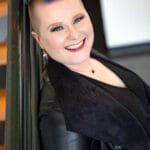
Sarah Buino, LCSW, RDDP, CADC, CDWF
Trauma, Addiction, and Ethical Leadership Educator
Sarah Buino, LCSW, RDDP, CADC, CDWF, NMT, is a licensed clinical social worker, therapist, educator, consultant, speaker, and organizational adviser whose work connects developmental trauma, addiction treatment, shame resilience, therapist self-awareness, ethical leadership, and systems-level change. She founded Head/Heart Therapy and Head/Heart Business Therapy and now concentrates much of her work on helping clinicians, group-practice leaders, and healthcare organizations build more relationally responsible and psychologically sustainable ways of working.
Sarah Buino, LCSW, RDDP, CADC, CDWF, NMT, brings a deliberately integrative perspective to behavioral healthcare. Her current professional biography identifies her as a Registered Dual Diagnosis Professional, Certified Alcohol and Other Drug Counselor, Certified Daring Way Facilitator, and NARM Master Therapist. These areas of training support work with complex trauma, substance-use concerns, shame, perfectionism, relational disconnection, and the protective patterns people develop when safety, belonging, or emotional expression has been threatened.
Sarah Buino, LCSW, RDDP, CADC, CDWF, NMT, is also the creator and host of Conversations With a Wounded Healer, a podcast examining how therapists’ personal healing, professional identities, organizational roles, and social environments influence the care they provide. Her teaching invites helping professionals to consider their own humanity without romanticizing impairment or weakening ethical responsibility. The central question is not whether therapists have wounds, but whether they engage those wounds with enough honesty, support, and accountability to keep clients from carrying them.
Professional Background
Sarah Buino, LCSW, RDDP, CADC, CDWF, NMT, earned her master’s degree from Loyola University Chicago and completed undergraduate study at Miami University in Oxford, Ohio. Loyola University Chicago has identified her as an alumna and adjunct faculty member in its School of Social Work, while her current professional biography reports that she has taught substance-use coursework to developing social workers. Her academic work complements clinical experience in addiction treatment, trauma therapy, professional education, and practice leadership.
Sarah Buino, LCSW, RDDP, CADC, CDWF, NMT, created Head/Heart Therapy, a Chicago group practice serving adolescents and adults affected by complex trauma, addiction, shame, guilt, mood concerns, anxiety, and relationship difficulties. The practice’s current website identifies her as its original creator and notes that she continues to hold a small individual caseload while focusing more extensively on groups and organizations. The site now lists Rayell Grayson as owner and president, so Sarah should be described as the founder rather than the current owner.
Sarah Buino, LCSW, RDDP, CADC, CDWF, NMT, subsequently developed Head/Heart Business Therapy to support therapists and healthcare workers navigating the intersection of care, power, money, leadership, workplace culture, and professional integrity. Her consultation treats organizations as relational systems in which attachment patterns, conflict avoidance, overfunctioning, authority, compensation, and unspoken expectations may shape daily decisions. This perspective challenges leaders to examine whether their policies support ethical practice or simply require clinicians to absorb increasing systemic strain.
Sarah Buino, LCSW, RDDP, CADC, CDWF, NMT, helped launch the NARM Training Institute podcast Transforming Trauma in 2019 and served as host through 2021. In that role, she facilitated conversations about developmental trauma, relational disconnection, shame, agency, and the therapeutic importance of clinicians examining their own internal responses. NARM remains one influence within her broader integrative approach; it should not be presented as the only framework informing her work or as universally appropriate for every client.
Sarah Buino, LCSW, RDDP, CADC, CDWF, NMT, has also collaborated with Sarah Suzuki through The Sarahs, an education and consultation initiative focused on antiracism, liberation, accountability, and organizational change. Their work asks behavioral-health professionals to examine how racism, hierarchy, access, institutional culture, and professional power affect treatment and workplace experience. Her official biography also documents recognition from the Illinois Certification Board, NASW-Illinois, the Illinois Association of Addiction Professionals, and Sierra Tucson.
Areas of Expertise
Developmental Trauma and Relational Healing. Sarah Buino, LCSW, RDDP, CADC, CDWF, NMT, helps clinicians understand how early relational environments may shape self-protection, shame, emotional disconnection, perfectionism, difficulty receiving care, and fear of dependence or rejection. Her work emphasizes curiosity about the purpose of a protective pattern instead of treating it as evidence that a client is resistant or defective. Clinical Events’ Trauma Therapy for Clinicians provides complementary guidance on assessment, stabilization, treatment selection, and evidence-informed trauma care.
Shame Resilience and Authenticity. Buino explores how shame can appear through withdrawal, self-criticism, overachievement, defensiveness, people-pleasing, substance use, or the pressure to perform competence. Effective work with shame requires attunement and accountability rather than reassurance that dismisses the client’s experience or confrontation that increases exposure. Clinical Events’ Healing Shame in the Therapy Room discusses how respectful therapeutic relationships can help clients develop a less punitive relationship with hidden parts of themselves.
Addiction and Co-Occurring Concerns. Her RDDP and CADC credentials support education involving substance-use disorders and co-occurring mental-health concerns. Buino encourages clinicians to examine what a substance or compulsive behavior does for the person—such as reducing activation, interrupting shame, creating belonging, or producing temporary emotional distance—while still addressing risks and consequences. This approach supports individualized treatment rather than moral judgment or a single explanation for addiction.
The Wounded Healer and Therapist Self-Awareness. Buino is closely associated with the idea that therapists participate in their own ongoing healing while caring for others. This does not excuse impaired practice. It highlights the need for personal therapy, supervision, consultation, boundaries, rest, and honest reflection when grief, trauma, illness, financial stress, countertransference, or professional isolation begins to affect judgment. Her podcast creates space for these conversations without making clients responsible for the clinician’s emotional needs.
Ethical Leadership and Organizational Systems. Through Head/Heart Business Therapy, Buino examines how workplace structure affects care. Productivity pressure, unclear authority, exploitative compensation, inadequate supervision, discrimination, and chronic understaffing cannot be repaired through self-care alone. Ethical leaders need the capacity to discuss power, receive feedback, clarify roles, make defensible decisions, and repair harm without collapsing into shame or defensiveness. Clinical Events’ Therapy Ethics: Boundaries, Confidentiality, and Competence offers related guidance on power, professional judgment, and client protection.
Anti-Oppressive Practice and Accountability. Her collaborative training addresses racism, privilege, access, and structural inequity within mental-health and addiction services. Buino distinguishes shame-driven paralysis from responsibility. Accountability requires listening, examining impact, changing behavior, redistributing authority where appropriate, and continuing the work after a training ends. The objective is not to claim moral perfection, but to develop organizational practices that reduce avoidable harm and create more equitable participation.
Professional Boundaries and Sustainable Practice. Buino’s work recognizes that therapists’ capacity is shaped by both personal and systemic conditions. Clear boundaries, fair expectations, reliable consultation, and psychologically safer workplaces support competent care. Clinical Events’ Professional Boundaries Every Therapist Should Know provides additional examples involving role confusion, boundary drift, digital communication, and ethical risk management.
Professional Education, Speaking, and Podcasting. Her workshops, consultation, teaching, and podcast conversations translate complex clinical and organizational questions into practical reflection. Buino’s work is especially relevant to therapists, addiction professionals, supervisors, practice owners, and healthcare leaders seeking to connect personal insight with ethical action inside rapidly changing systems.
Authored Publications Review
[Certain] An Authored Publications section has not been added. Sarah Buino has created podcasts, articles, webinars, workbooks, and professional training resources, but I did not verify an independently published book, peer-reviewed journal article, or formally published book chapter that clearly lists her as the author. These materials should not be presented as authored publications merely to fill the section.